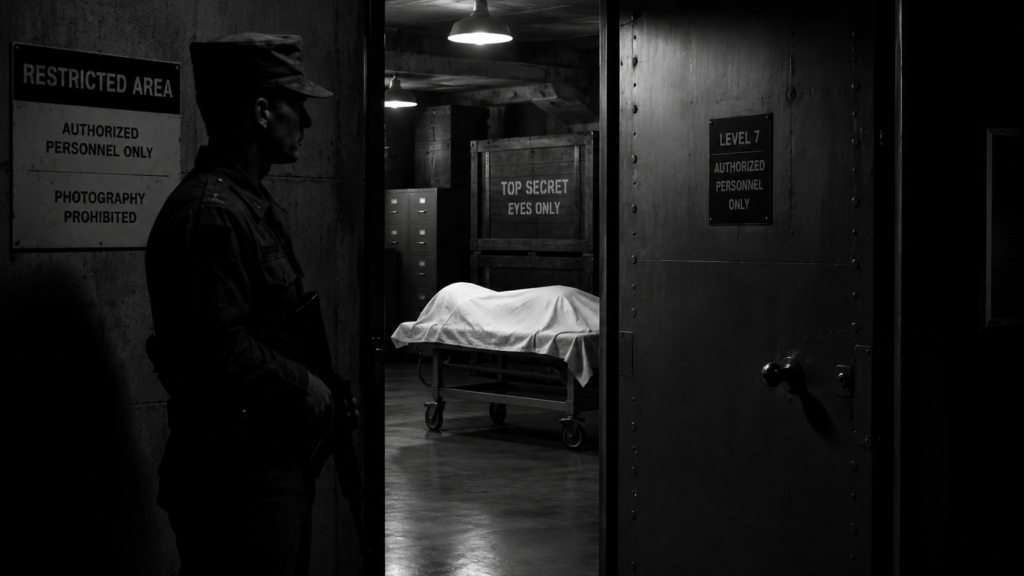
The Greys, also known as Grays, Zeta Reticulans or Roswell Greys, are the most iconic non-human entities in modern UFO mythology. They are usually described as small humanoid beings with oversized heads, smooth grey or pale skin, thin bodies, minimal facial features and large black almond-shaped eyes.
In abduction narratives, they rarely behave like explorers or diplomats. Instead, they appear as silent operators, biological technicians, medical examiners or controlled workers carrying out procedures that witnesses struggle to understand. Their image is strongly linked with missing time, bedroom visitations, hypnosis, telepathy, medical rooms, alleged implants and human-alien hybridization stories.
PBS summarizes the standard popular image of Greys as humanoid beings with long limbs, large black eyes, small noses, thin mouths and grey skin or grey clothing; it also notes that they are known as Zeta Reticulans, Roswell Greys or simply Grays.
No scientific or official source confirms that the Greys exist as real biological beings. NASA states that it has not found credible evidence of extraterrestrial life and that there is no evidence UAP are extraterrestrial, while AARO’s historical report found no evidence that any U.S. government investigation confirmed UAP as extraterrestrial technology. The Greys should therefore be treated as a reported entity type, cultural archetype and central figure in UFO lore — not as a confirmed species.
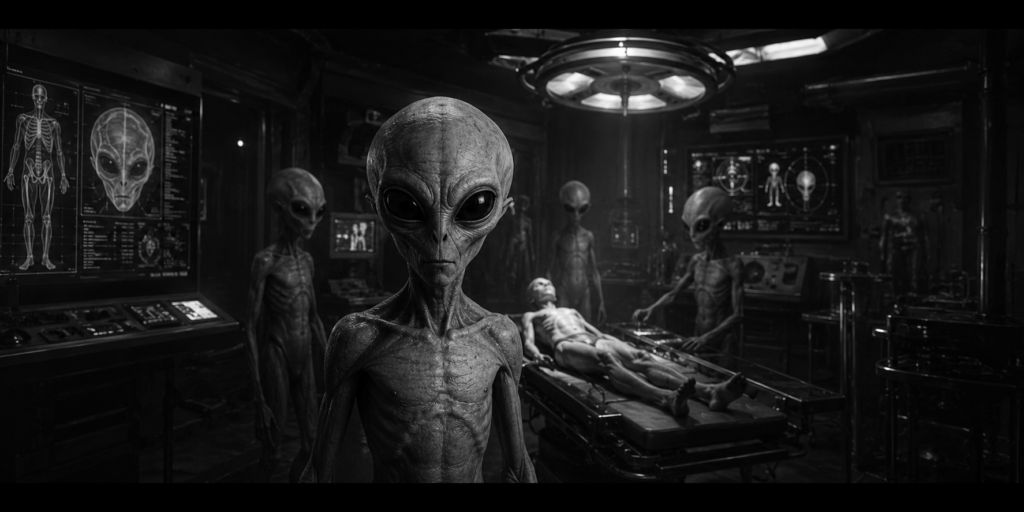
Typical appearance:
– Short humanoid body
– Large head
– Grey, pale or ash-colored skin
– Large black almond-shaped eyes
– Small or almost invisible mouth
– Small nose or nostril slits
– Thin neck
– Slender limbs
– Long fingers
– Minimal clothing or tight-fitting suits
– Emotionless or unreadable facial expression
– Often described as silent or telepathic
Reported behavior
The Greys are usually described as calm, emotionless and task-focused. In many accounts, they do not speak aloud. Communication is often described as telepathic, visual or impression-based. Witnesses report receiving thoughts, images, commands or emotional pressure rather than ordinary language.
In abduction lore, they are commonly associated with medical or biological activity: examining bodies, taking samples, scanning eyes, touching the head or abdomen, placing people on tables, using small instruments, and sometimes showing hybrid children or strange reproductive imagery.
They are usually not portrayed as physically aggressive in a conventional way. Their fear factor comes from control: paralysis, silence, lack of consent, memory loss and the sense that human beings are being studied as biological subjects.
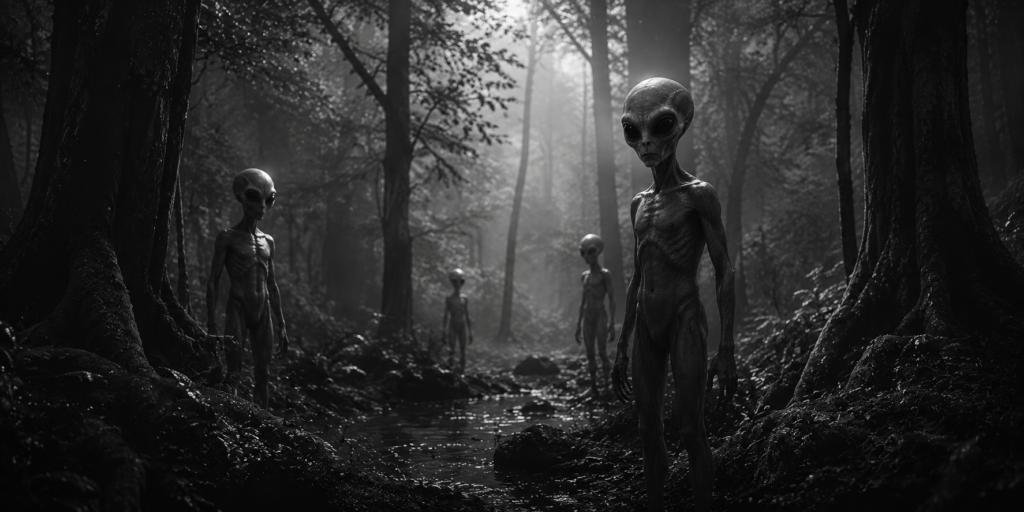
Common roles in UFO lore
| Abductors | They appear near beds, roads, cars, isolated houses or remote locations and are linked to missing time or sudden memory gaps |
| Medical technicians | They are often described as performing examinations, taking samples or using unknown instruments |
| Biological researchers | In hybridization narratives, Greys are connected to genetic sampling, reproductive procedures and long-term monitoring |
| Workers or drones | Some lore portrays them as created beings, clones, biological robots or task-specific workers serving a higher intelligence |
| Messengers or telepathic communicators | In some contact accounts, they deliver warnings, images or symbolic messages |
Where did the image of the Greys come from?
1. Pre-UFO literary roots
The Grey archetype did not appear from nowhere. Before modern UFO culture, science fiction had already imagined future humans or extraterrestrial beings with enlarged heads, reduced bodies and strange, non-human features. H.G. Wells and other early science-fiction writers helped popularize the idea that advanced intelligence might be linked with large heads, fragile bodies and reduced physicality. Project Gutenberg’s H.G. Wells collection includes works such as The Time Machine, The War of the Worlds and The First Men in the Moon, which helped shape early speculative images of alien or post-human beings.
Early science fiction helped prepare the visual language: large heads, thin bodies, strange eyes, advanced intelligence and biological otherness. The modern Grey, however, became recognizable through UFO and abduction culture rather than literature alone.
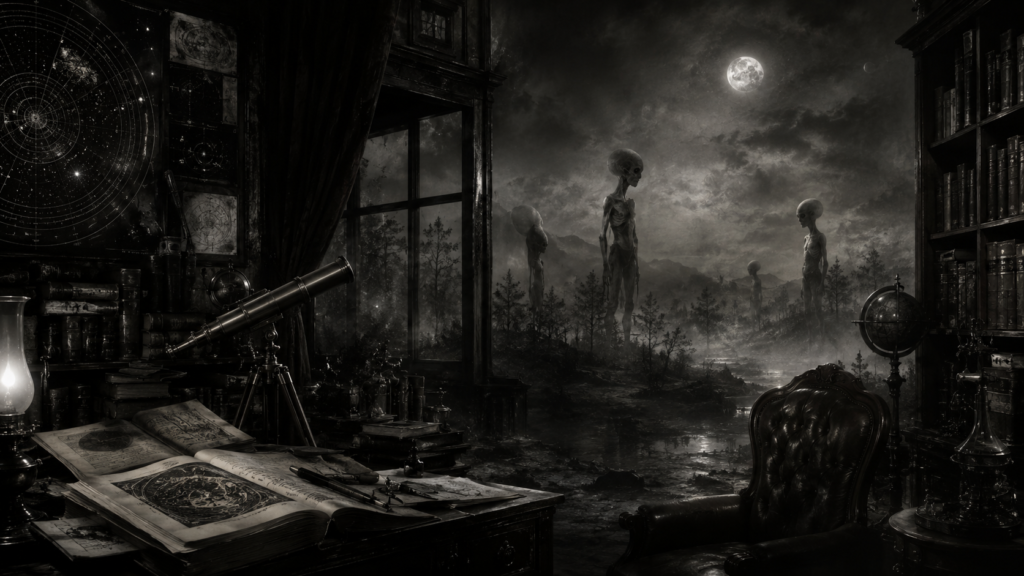
2. Betty and Barney Hill — the abduction template
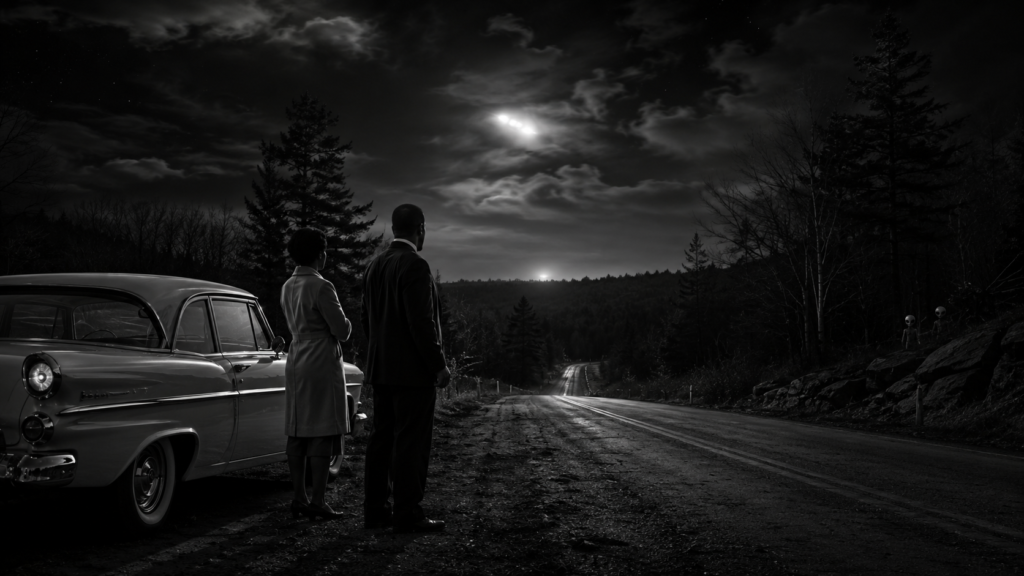
The most important case for the modern Grey archetype is Betty and Barney Hill, who claimed that they were abducted in New Hampshire in September 1961. The University of New Hampshire holds the Betty and Barney Hill Papers, including correspondence, journals, manuscripts, newspaper clippings, photographs, slides and DVDs connected with their experience and UFO research. The archive also notes key elements of the story: lights in the sky, missing time, bipedal humanoid creatures, hypnosis, Betty’s torn and stained dress, Barney’s scraped shoe and a broken binocular strap.
This case matters because it established many later abduction motifs:
- a night drive;
- strange lights;
- a craft;
- humanoid beings;
- missing time;
- hypnosis;
- medical examination;
- star map;
- physical traces;
- long-term psychological impact.
The Hills’ beings were not identical to the later pop-culture Grey, but the case became one of the foundations from which the Grey image developed.
3. Roswell and the hidden body myth
Roswell gave the Grey alien a new and darker role in modern UFO mythology. In earlier encounter stories, the Greys were often described as visitors, observers or abductors. In the Roswell legend, they became something else: recovered bodies, hidden evidence and the silent centre of a suspected military cover-up. The 1947 incident itself remains officially explained as the recovery of material from a classified balloon-related program, not an extraterrestrial craft. Yet in popular imagination, Roswell transformed the Grey from a mysterious being in the sky into a physical secret kept behind locked doors — a small body in a military hangar, an autopsy room, a sealed archive. This is why the phrase “Roswell Greys” does not describe confirmed evidence, but a powerful fusion of crash-retrieval legend, Cold War secrecy and the enduring image of the Grey alien.