
How a crashed object in the New Mexico desert became linked to the Greys
Few UFO stories have shaped modern alien mythology as strongly as Roswell. The case began not with bodies, autopsies or secret underground laboratories, but with debris found on a ranch in New Mexico in the summer of 1947. What followed was a confusing sequence of official statements, newspaper headlines, Cold War secrecy and later witness claims that gradually transformed Roswell into the central crash-retrieval legend of the UFO age.
At the factual core of the story is a real event: something came down near Roswell, New Mexico, and material was recovered by personnel connected with Roswell Army Air Field. On July 8, 1947, the Roswell Army Air Field public information office reported that the military had recovered a “flying disc.” The next day, the explanation changed: the object was described as a radar-tracking weather balloon rather than a flying saucer. Decades later, U.S. government investigations linked the recovered material not to extraterrestrials, but to Project Mogul, a classified balloon-based program designed to detect Soviet nuclear tests.
The timing mattered. Only weeks earlier, on June 24, 1947, pilot Kenneth Arnold had reported seeing fast-moving objects near Mount Rainier, Washington. Newspaper coverage helped popularize the phrase “flying saucer,” and the United States entered a period of intense public fascination with mysterious aerial objects. Roswell happened inside that atmosphere of rumour, Cold War tension and sudden media attention.
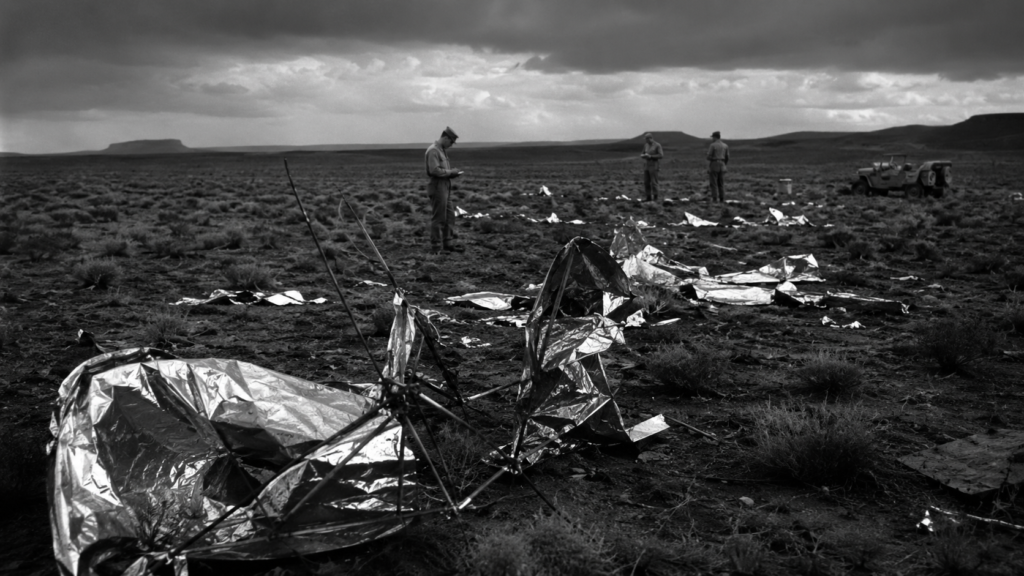
According to later summaries, rancher W.W. “Mac” Brazel found unusual debris on ranchland northwest of Roswell. Descriptions of the material vary, but commonly include rubber, foil-like material, sticks or balsa-like components, and paper-like fragments. Brazel eventually reported the debris to local authorities, and the sheriff’s office contacted Roswell Army Air Field. Major Jesse Marcel, an intelligence officer with the 509th Bomb Group, became one of the central military figures associated with the recovery.
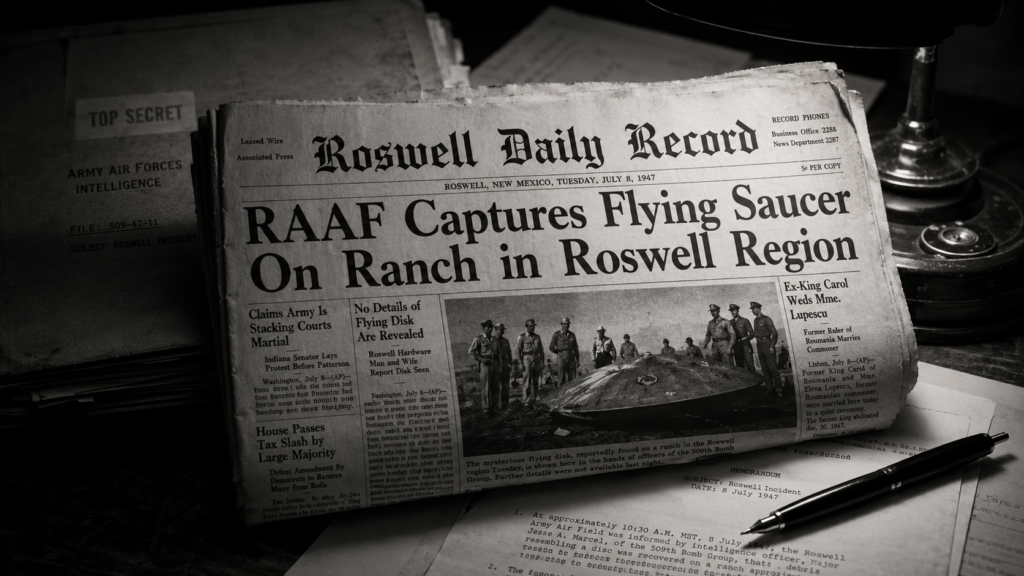
The first public statement created the mystery. The Roswell Daily Record ran the famous headline: “RAAF Captures Flying Saucer On Ranch in Roswell Region.” That single headline became one of the most important visual artifacts in UFO culture. Even after the military changed the explanation to a weather balloon, the original language remained powerful: for a brief moment, an official military source appeared to have confirmed possession of a “flying disc.”
The official explanation also changed over time. In 1947, the public explanation was a weather balloon. In the 1990s, after renewed public pressure and a congressional request, the U.S. Air Force concluded that the debris was most likely associated with Project Mogul, a then-classified balloon project. Project Mogul used high-altitude balloon arrays carrying sensors intended to detect sound waves from Soviet nuclear tests. This means the 1947 “weather balloon” explanation was incomplete, but the later official position was still terrestrial and military, not extraterrestrial.
The U.S. National Archives summarizes the official position clearly: Project Blue Book files do not contain documentation discussing the 1947 Roswell incident, and the Air Force investigation found recovered materials consistent with a classified balloon device. The same summary states that no records indicated or hinted at the recovery of alien bodies or extraterrestrial materials.
The Government Accountability Office also searched for records in the 1990s after a request from Congressman Steven Schiff of New Mexico. GAO found that some Roswell Army Air Field records had been destroyed without clear documentation of when, by whom, or under what authority. That missing-record issue became one reason the case continued to attract suspicion. At the same time, GAO reported that only two 1947 government records directly mentioning the incident were located: a July 1947 history report from the 509th Bomb Group and Roswell Army Air Field, and an FBI teletype dated July 8, 1947. Both pointed toward a balloon or radar-tracking object rather than an alien craft.
The “alien body” part of Roswell became much stronger later. The original 1947 documentation centered on debris, not bodies. Over the following decades, especially after renewed interest in Roswell in the late 1970s and the 1980 publication of The Roswell Incident by Charles Berlitz and William L. Moore, the story expanded into claims of crash retrieval, secret transport of wreckage, military intimidation, hidden storage and dead extraterrestrial occupants. Britannica notes that the 1980 book helped revive the Roswell story and that later hoaxes and conspiracy theories, including the alleged Majestic 12 documents and the 1995 “alien autopsy” film, further increased public interest.
This is where Roswell becomes linked to the Greys. The modern Grey alien image usually involves small humanoid bodies, oversized heads, large dark eyes, minimal facial features and fragile limbs. That image did not originate cleanly from the 1947 Roswell press reports. It developed through a wider UFO culture, especially abduction stories such as the Betty and Barney Hill case of 1961, which helped define later alien-abduction imagery: grey beings, medical examination, missing time and memory recovered under hypnosis.
Roswell gave the Grey image a different role. In abduction stories, Greys are often visitors, examiners or abductors. In Roswell mythology, they become bodies: small dead beings allegedly recovered from a crashed craft, taken away by the military, hidden from the public and possibly autopsied. The phrase “Roswell Greys” therefore does not describe a confirmed biological discovery. It describes a powerful cultural merger between two strands of UFO mythology: the crash-retrieval legend and the Grey alien archetype.
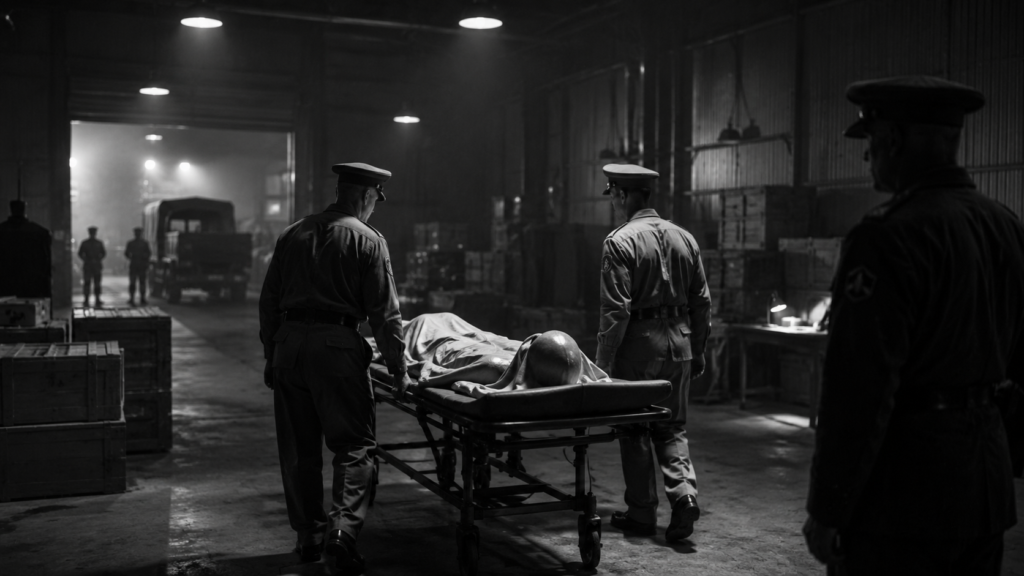
The alleged bodies also solved a narrative problem. Debris alone is ambiguous. It can be explained as a balloon, aircraft material, radar equipment or classified military hardware. Bodies, however, would be emotionally and symbolically decisive. A small corpse with a large head and inhuman eyes would turn a strange crash into proof of visitation. That is why the “alien body” image became so central: it gave Roswell a human-like witness object, something that could be imagined in a hangar, on an autopsy table, in a sealed crate or behind a restricted military door.
The U.S. Air Force addressed these body stories in a second report, The Roswell Report: Case Closed, published in 1997. According to Britannica’s summary, that report proposed that some alien-body memories may have resulted from people combining separate events over time, including Project Mogul material, parachute crash-test dummies, an injured airman and charred bodies from an aircraft crash. This explanation remains controversial among UFO researchers, partly because some of the dummy-drop activities occurred after 1947, but it shows how the official investigation tried to explain not only the debris story, but also the later body claims.
For believers, Roswell remains the archetypal cover-up: an object crashes, the military arrives, the first announcement says “flying disc,” the story changes, records are missing, witnesses later describe extraordinary materials, and the bodies are hidden away. For skeptics, Roswell is a case study in how secrecy, memory, media and Cold War technology can create a modern myth. Both readings explain why Roswell endured. It sits exactly at the intersection of government secrecy and cosmic imagination.
The strongest evidence for Roswell as a historical event is not disputed: debris was found, the military became involved, the first public announcement used extraordinary language, and the official explanation changed. The disputed part is what the debris represented. Official records and investigations point to a classified balloon project, not an extraterrestrial vehicle. The “alien body” element belongs mainly to later testimony, books, hoaxes, reconstructions and popular culture.
Yet mythologically, Roswell is almost impossible to remove from the Grey alien image. The case gave the Greys a place of origin in the modern imagination: not simply the stars, but the locked room, the desert crash site, the military base and the forbidden archive. In that sense, Roswell transformed the Grey from a visitor into evidence.