
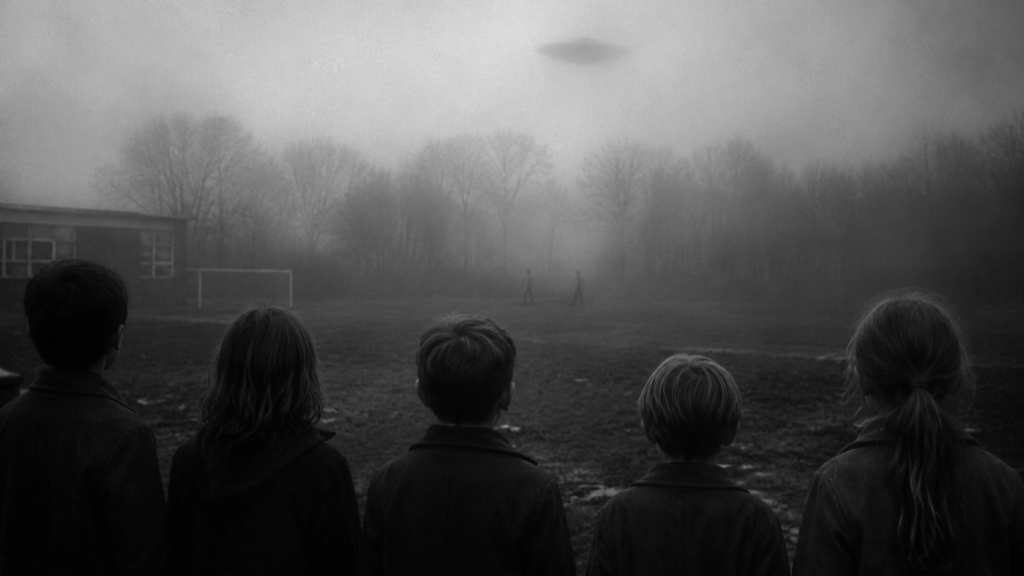
On 16 September 1994, dozens of pupils at Ariel School near Ruwa, Zimbabwe, reported seeing a strange object and non-human figures near the edge of their school grounds. The case became one of the most discussed witness-based UFO encounters of the 1990s because the primary witnesses were children, many of whom gave similar descriptions shortly after the event and continued to speak about the experience years later.
Witness testimony is often the most fragile type of evidence in UFO research. It depends on memory, perception, fear, age, expectation and the way questions are asked. But sometimes a witness case becomes difficult to ignore, not because it proves what happened, but because of the number of people involved, the consistency of the reports and the lasting impact on those who say they were there.
The Ariel School incident is one of those cases.
On 16 September 1994, a group of children at Ariel School, a private school near Ruwa, Zimbabwe, reported seeing something unusual during their mid-morning break. Contemporary summaries of the case describe around 60 to 62 pupils saying they saw a strange craft or object near the school playground, followed by small beings or figures near the bushland beyond the school grounds. The BBC’s Witness History describes the case as involving around 60 children who said they had seen a “space ship” and “aliens” near their school playground.
What makes the case especially important for witness testimony is that the children were not describing an event years later as adults. Some were interviewed soon after the alleged sighting, and their drawings became part of the case’s visual record. The Mail & Guardian revisited the incident twenty years later and noted that 62 pupils said they had seen an alien spaceship, also publishing examples of the children’s drawings connected to the event.
The reported details vary, but several core elements repeat across many retellings: a strange object or light, a landing or descent near the school grounds, small figures with large eyes, fear among the children and a sense that the experience carried a message. In later accounts associated with psychiatrist John E. Mack’s interviews, some children described receiving an environmental warning or impression, although this part of the story is one of the most debated elements of the case.
John Mack’s involvement brought the case into a wider conversation about psychology, belief and the treatment of people who report extraordinary experiences. Mack, a Harvard psychiatrist, was already controversial for taking alien abduction claims seriously as experiences that deserved investigation rather than ridicule. The Ariel School case later became a major part of documentaries and public discussions about whether witness testimony should be dismissed simply because the claim sounds impossible.
For believers, the case is compelling because many children reportedly described similar events, seemed emotionally affected and maintained their accounts over time. For skeptics, the case is problematic because the children were young, the event occurred after regional sky sightings had already received attention, and later interviews may have shaped or reinforced parts of the narrative. Skeptical analyses have proposed alternatives including social influence, misinterpretation, contamination between witnesses, media context, or other conventional explanations.
This is exactly why the Ariel School case belongs in the Witness testimony section. It does not prove that non-human beings visited a school in Zimbabwe. It does not provide verified physical evidence, radar data or biological material. What it does provide is a rare example of a mass witness claim involving children, immediate emotional reaction, drawings, later adult reflection and decades of debate.
The strength of the case is not that it gives us certainty. Its strength is that it forces a difficult question: when many witnesses insist they experienced something extraordinary, how should an archive preserve their testimony without turning testimony into proof?
In the Evidence room, Ariel School should be treated as a powerful witness case — not confirmed contact, not simple folklore, but a documented report that continues to challenge the boundary between memory, culture, psychology and the unexplained.
Evidence type: Witness testimony
Witness group: Children / school pupils
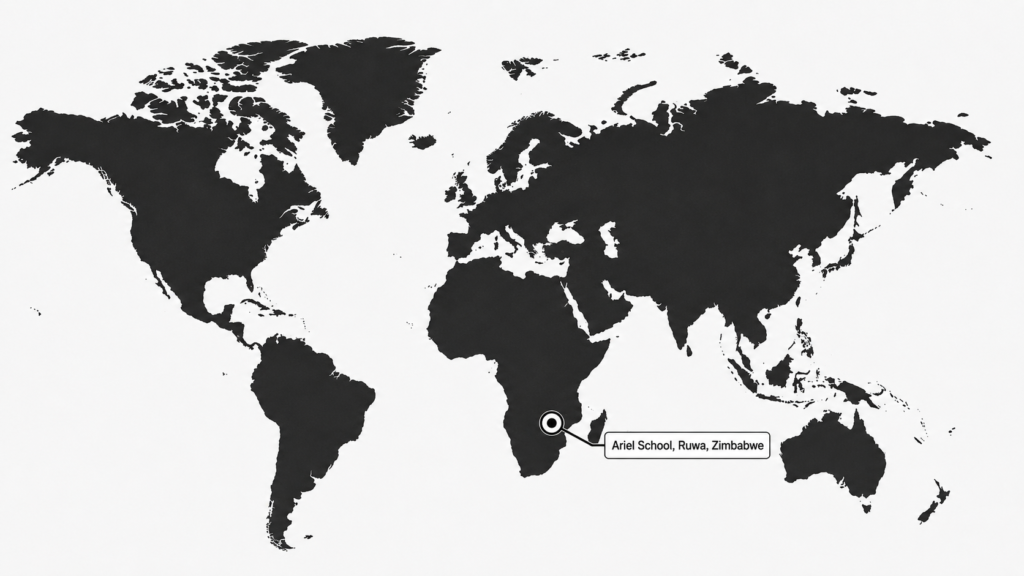
Location: Ariel School, near Ruwa, Zimbabwe
Date: 16 September 1994
Reported phenomenon:
Object or craft, small figures, possible telepathic or environmental message
Supporting materials:
Interviews, witness drawings, later documentaries, retrospective adult testimony
Weaknesses:
No confirmed physical evidence, no adult staff eyewitnesses at the moment of the sighting, possible witness contamination, later interpretive layers
Archive credibility:
B/C — multiple witnesses, but no verified physical proof
Archive status:
Documented report / disputed interpretation / unresolved testimony
Why this case matters
The Ariel School incident is not valuable because it proves aliens exist. It is valuable because it shows why witness testimony remains one of the most difficult and emotionally charged forms of evidence in UFO research.
The case contains several elements that make testimony powerful: young witnesses, emotional impact, repeated descriptions, drawings and long-term memory. At the same time, it contains the weaknesses that make testimony fragile: suggestibility, group dynamics, later media attention and competing explanations.
Ariel School is a strong opening case because it shows the archive’s approach clearly: listen carefully, document the report, include the doubts and do not confuse mystery with proof.
sources
BBC Witness History — “Zimbabwe’s mass UFO sightings”
The Witness / John E. Mack Institute PDF — “The day the aliens landed”
Mail & Guardian — “Remembering Zimbabwe’s great alien invasion”
WHYY — Documentary discussion of Ariel Phenomenon
Skeptical Inquirer — “A Closer Look at Encounters and the Ariel School Sighting”